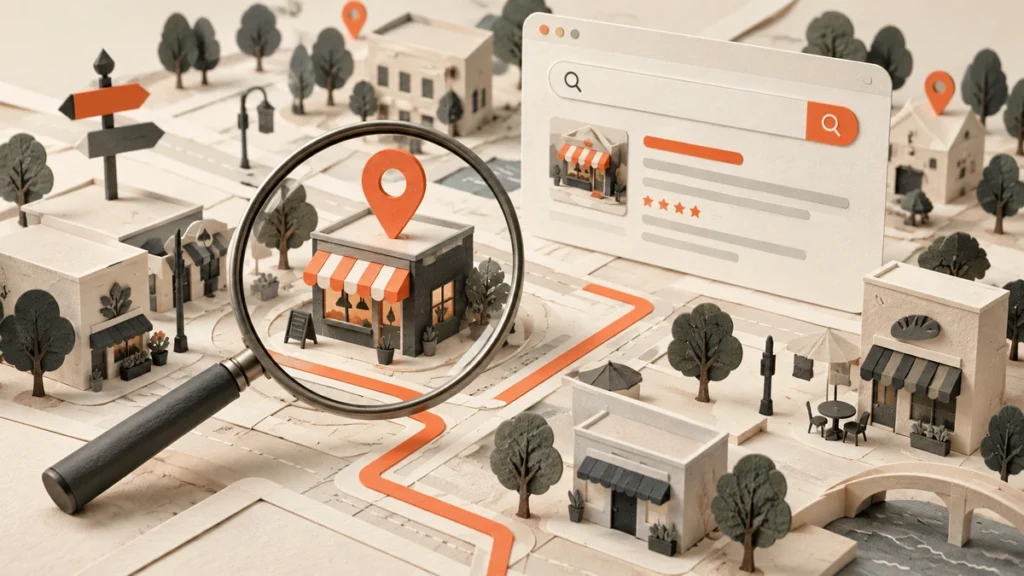
SEO helps your business appear when people search for the products or services you offer.
For a small business, this can mean appearing in front of someone who is looking for a service, comparing providers, or trying to solve a problem. Unlike advertising, SEO focuses on improving your visibility in unpaid search results.
SEO is not a quick shortcut. It requires useful content, a technically reliable website, relevant business information, and consistent improvement.
How Does SEO Help a Small Business?
Most customers search online before contacting a business. They may search for:
A service
A product
A local provider
A solution to a problem
Reviews or comparisons
Pricing information
If your website appears for these searches, you have an opportunity to attract visitors before they contact a competitor.
SEO can help a small business:
Increase relevant website traffic
Improve visibility in search results
Attract local customers
Build trust through useful content
Support service pages
Reduce dependence on paid advertising over time
The important word is “relevant.” A large amount of traffic is not useful if the visitors have no connection to your business.
What Are the Main Parts of SEO?
Keyword Research
Keyword research helps you understand what people search for and why they search for it.
A business may need to target different types of searches, such as:
- Service searches
- Location searches
- Problem-based searches
- Cost searches
- Comparison searches
- Question-based searches
The best keywords are not always the ones with the highest search volume. A specific keyword with fewer searches may bring more relevant visitors.
On-Page SEO
On-page SEO refers to the content and structure of your pages.
This includes:
- Page titles
- Meta descriptions
- Main headings
- Subheadings
- Service explanations
- Internal links
- Image alt text
- Readable URLs
Each page should have a clear purpose. A service page should explain the service. A blog article should answer a specific question or solve a specific problem.
Technical SEO
Technical SEO helps search engines crawl and understand your website.
It may involve:
- Website speed
- Mobile usability
- Indexing
- Sitemap settings
- Redirects
- Broken links
- Website security
- Structured data
- Crawl errors
Technical problems can make it harder for search engines to access your content, even when the content itself is useful.
Local SEO
Local SEO helps businesses appear for searches connected to a specific area.
Important local SEO activities may include:
- Optimising your Google Business Profile
- Keeping business information consistent
- Creating useful location pages
- Collecting genuine reviews
- Building relevant local references
- Publishing locally useful content
Local SEO is especially important for businesses that serve customers in specific towns, cities, or service areas. You can also follow this local SEO checklist to review the main areas that need attention.
How Long Does SEO Take to Work?
The timeline depends on your website, competition, content quality, technical condition, and the search terms you are targeting.
Some improvements may be visible within a few weeks. Stronger organic growth often takes longer, especially when a website is new or competing against established businesses.
SEO should be treated as an ongoing process, which is why many businesses use professional SEO services to maintain and improve their visibility. The goal is not only to reach a position once. The goal is to build a website that continues to be useful and visible.
Common SEO Mistakes Small Businesses Make
Common mistakes include:
Targeting keywords without understanding search intent
Publishing articles without linking them to service pages
Using the same content on several pages
Ignoring mobile usability
Expecting immediate results
Buying low-quality links
Writing only about the business
Focusing on traffic instead of relevant enquiries
A focused strategy is usually more useful than trying to rank for everything at once.
How to Start SEO for Your Business
Start with the basics by reviewing your website with this small business website checklist:
- Review your existing website.
- Identify your main services.
- Understand what your customers search for.
- Improve important service pages.
- Fix technical issues.
- Create useful supporting content.
- Track impressions, clicks, rankings, and enquiries.
- Improve pages based on real data.
If your website has technical or structural problems, fix those before publishing a large amount of new content.
Frequently Asked Questions
What is SEO for small businesses?
SEO for small businesses is the process of improving a website and online presence so potential customers can find the business through search engines.
Is SEO worth it for a small business?
SEO can be valuable when it attracts people who are actively searching for the business’s services or products. Results depend on the market, competition, website quality, and consistency.
How much do SEO services for small businesses cost?
The cost depends on the work required, the size of the website, competition, technical needs, content requirements, and the goals of the business.
Can a small business do SEO without an agency?
Yes. A business can handle basic SEO internally, but professional support may be useful when the website has technical issues or the business needs a larger strategy.
Need Help Improving Your Search Visibility?
SEO works best when your website, content, technical setup, and business goals support one another. Vissi can help you identify the most useful opportunities and create a practical plan through our SEO Services.