What Google Ads Actually Does
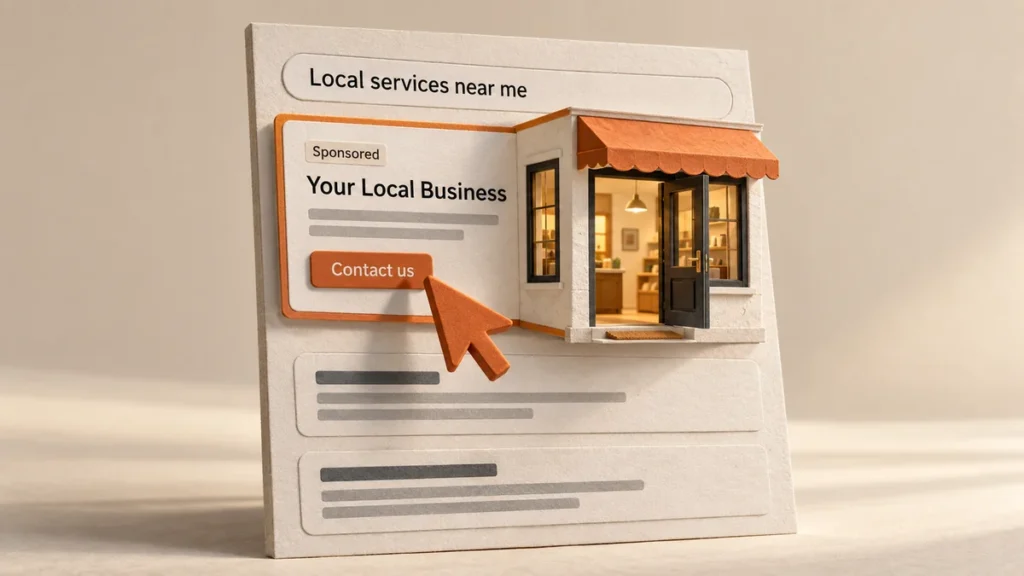
Google Ads is how you get your business in front of people right when they’re searching for what you sell. Someone types “plumber near me” or “emergency dentist” and your ad appears at the top of their search results. That’s Google Ads.
It’s pay-per-click advertising. You only pay when someone actually clicks your ad. You’re not paying for impressions or exposure. You pay for results.
The beauty of Google Ads is that you reach people with intent. They’re not just scrolling randomly. They’re actively searching for your services. They’re ready to buy. That’s why Google Ads can work so well for small businesses.
How Google Ads Actually Works
Here’s the basic flow: You set up an ad. You pick keywords you want to target. Someone searches those keywords. Your ad shows up. They click it. You pay. They go to your website.
Google runs an auction for every search. When someone searches “dentist in Denver,” Google runs an instant auction between all dentists bidding for that keyword. The winner gets the top spot. But it’s not just about who pays the most. Google also looks at ad quality and how relevant your ad is to what someone searched. A small business with a great, relevant ad can beat a big company paying more.
This is important: you set your budget. You decide how much you want to spend per day. Google won’t charge you more than that. If your budget is $50 a day, you’ll spend around $50 a day. You control the money.
Why Google Ads Works for Small Business
Small businesses compete against large companies all the time. Google Ads levels the playing field. You can target the exact geographic area you serve. A local plumber can target just their city. An HVAC company can target their service radius. You’re not wasting money reaching people too far away to hire you.
You can also target very specific keywords. If you’re a dentist who specializes in pediatric dentistry, you bid on “kids dentist near me” instead of just “dentist.” You reach exactly the right people. Small businesses often have a limited budget. Google Ads respects that. Start with $20 a day. $50 a day. Test it. See what works. Scale up from there. You’re not forced into large contracts or minimum spends. Pause anytime.
Google Ads Strategy for Real Estate Agents
Google Ads get you immediate visibility. Someone searches “homes for sale in your city” and your ad shows up at the top. The good news: you generate leads fast. The bad news: ads cost money and you’re paying every day.
Focus on high-intent keywords. “Homes for sale in [city],” “luxury homes [city],” “sell my home fast [city],” “real estate agent near me.” These keywords capture active buyers and sellers.
Match your ads to relevant landing pages. Ads for buyers go to listing pages. Ads for sellers go to “sell your home” pages. Match the ad to the page or people bounce.
Google Ads are measurable. You see exactly which keywords generate leads. Which leads actually become clients. What you’re paying per sale. This data lets you optimize constantly.
The Different Types of Google Ads
Google Ads has different campaign types. Search Ads are the main one. These show up in search results when people type keywords. This is where most small businesses start.
Local Services Ads are different. They show up above search results with a “Google Guaranteed” badge. You pay per lead, not per click. These work well for service businesses like plumbing, HVAC, electricians. Google filters the leads so you only pay for qualified ones.
Display Ads show up on websites across the internet. These are good for brand awareness but not great for immediate sales. Video Ads run on YouTube. Performance Max uses AI to run ads across all Google properties. Most small businesses should start with Search Ads.
Setting Up Your First Google Ads Campaign
You need a Google account. You need a website. Then you set up in Google Ads.
First, decide what you want people to do. Call you? Buy something? Fill out a form? Book an appointment? Your goal determines everything.
Second, do keyword research. Think about what people search when they need what you offer. A plumber targets “emergency plumber,” “pipe leak,” “water heater repair.” A dental practice targets “dentist near me,” “teeth whitening,” “emergency dental.” Use Google’s Keyword Planner tool. It shows search volume and competition.
Third, write your ads. Your headline is first. Make it count. Include your main keyword. Be specific. “Emergency Plumber Denver” not “Plumbing Services.” Your description should have a benefit. “24/7 Service” or “Same-Day Appointments.” Include a call-to-action. “Call Now” or “Book Today.”
Fourth, set your geographic targeting. This matters a lot. Tell Google you only want to reach people in your service area. Don’t waste money on clicks from people in other states.
Fifth, set your daily budget. Start small. Test the market. See what your actual cost per lead is. Then decide if it’s worth scaling.
Common Mistakes Small Businesses Make
People bid on the wrong keywords. Lots of searches sound related but don’t convert. You’re just wasting money on clicks from people not ready to buy.
People write bad ad copy. Your ad has to stand out and be relevant. If your ad doesn’t tell people exactly what you do, they won’t click. Or they’ll click but won’t convert.
People don’t track results. You set up an ad but never check if it’s actually generating leads. Set up conversion tracking from day one. Know your actual cost per lead. Without this data, you’re flying blind.
People target too wide. They target the whole country when they only serve one city. Your geographic targeting needs to match reality.
People give up too fast. Google Ads takes a week or two to get data. Don’t judge your whole campaign on three days of results. Give it time to gather data before you make big changes.
Google Ads vs Local SEO
Google Ads gets you results fast. Within days you can have leads coming in. Local SEO takes months to build but then works for free. Many small businesses use both. Run Google Ads while you’re building local SEO. When local SEO starts delivering leads, you might reduce ad spend. Or you might keep both running. It depends on your results.
Google Ads works in every market. Local SEO depends on your competition and website quality. In very competitive markets, Google Ads might be your only way to get visibility quickly.
Common Questions About Google Ads for Small Business
What is Google Ads?
Google Ads is Google’s advertising platform where you bid to show ads in search results. You only pay when someone clicks your ad. It’s designed to reach people actively searching for what you offer.
How much does Google Ads cost?
Cost depends on your industry and keywords. Competitive keywords cost more. Less competitive keywords cost less. You set your daily budget and Google works within it. You can start with any budget.
How do I know if Google Ads is working?
Set up conversion tracking. Track phone calls. Track form submissions. Track appointments booked. See what your cost per acquisition is. Compare that to your profit per customer. If the math works, it’s working.
Does Google Ads work for all types of businesses?
Google Ads works best for businesses where people search for solutions. Service businesses, e-commerce, local businesses. It works less well for businesses where people don’t actively search. But most small businesses can use it.
Can I do Google Ads myself or should I hire someone?
You can definitely start yourself. Use Google’s free training. But Google Ads is complex. Small mistakes waste money. Many businesses find that hiring someone experienced pays for itself through better optimization.
Ready to Reach Customers Searching for You?
Google Ads gets your business in front of customers at the exact moment they’re looking. It’s fast, measurable, and scalable. Start small. Test. See what works. Then scale from there.