
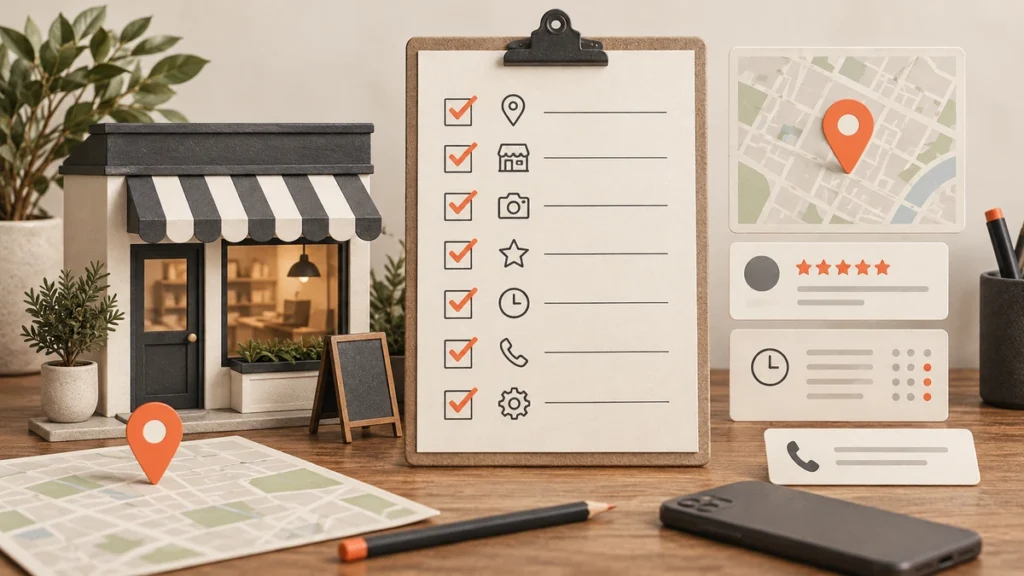
Local SEO helps customers find your business when they search for services in a specific area, and it is an important part of effective SEO services for local businesses.
This can include searches such as “website developer near me,” “SEO agency in Melbourne,” or “best accountant in Brisbane.”
Use this local SEO checklist to review the main parts of your local search presence.
1. Complete Your Google Business Profile
Your Google Business Profile is one of the most important assets for local search.
Review that your profile includes:
Correct business name
Accurate category
Phone number
Website address
Opening hours
Service areas
Business description
Relevant photos
Services or products
Booking or contact options
Keep the information accurate. Incorrect hours or outdated phone numbers can create a poor customer experience.
2. Keep Your Business Information Consistent
Your business name, phone number, website, and address or service-area information should be consistent across important online platforms.
Check your:
Website
Google Business Profile
Social profiles
Business directories
Industry listings
Local association pages
Small differences can create confusion, especially when customers are trying to verify that they have found the correct business.
3. Create Useful Service Pages
A local business should not rely only on its homepage. Use this small business website checklist to review the wider website experience.
Create clear service pages that explain:
- What you offer
- Who the service is for
- Which locations you serve
- How the process works
- How someone can contact you
Do not create separate location pages by changing only the city name. Each page should offer genuinely useful information for that location.
4. Ask for Genuine Reviews
Reviews help potential customers decide whether to contact you.
Ask satisfied customers to leave honest reviews. Do not offer rewards in exchange for positive reviews or ask people to write something they did not experience.
Respond to reviews professionally. A thoughtful response shows that your business pays attention to customers.
5. Add Local Information to Your Website
If you serve a particular area, explain that clearly.
Useful local information may include:
Service areas
Local project examples
Team or office information
Service availability
Local customer questions
Travel or coverage details
Only include information that is accurate and useful.
6. Make Your Website Mobile-Friendly
Many local searches take place on mobile devices.
Check that visitors can:
Read your content
Tap your phone number
Open your directions
Submit a form
View your services
Use your navigation
A local searcher often wants a quick answer. Make the next step easy.
7. Build Relevant Local References
Local references can come from:
Industry associations
Chambers of commerce
Local business directories
Community organisations
Relevant partners
Local publications
Focus on relevant and trustworthy sources. Avoid adding your business to poor-quality directories simply to create more listings.
8. Publish Helpful Local Content
Local content should solve a real question or provide useful information.
Examples include:
Service guides for a particular area
Local customer questions
Industry information
Project explanations
Local regulations where relevant
Area-specific buying advice
Do not add a location name to a generic article and call it local content. The information should be genuinely useful to people in that area.
9. Track Your Results
Use Google Search Console and analytics tools to review:
Local search queries
Impressions
Clicks
Website visits
Contact form submissions
Calls
Performance by location
Tracking helps you understand whether your local SEO work is attracting the right people.
10. Review Your Local SEO Regularly
Local information can become outdated.
Review your profile and website when:
Your opening hours change
You add a new service
You change your phone number
You serve a new area
Your business moves
Your team changes
Your services change
Frequently Asked Questions
What is local SEO for small businesses?
Local SEO helps a business appear when people search for services, products, or businesses in a specific area.
Is Google Business Profile enough for local SEO?
No. It is important, but local SEO also involves your website, reviews, business information, content, links, and customer experience.
How long does local SEO take to work?
The timeline depends on competition, location, website quality, reviews, and the current strength of the business’s online presence.
Do small businesses need location pages?
Only when each location page provides useful, unique information. Repeating the same content with different location names is not a strong strategy.
Need Help Improving Your Local Search Visibility?
A strong local presence requires accurate information, useful service pages, genuine reviews, and a website that supports your customers. Vissi can help improve these areas through our SEO Services.